
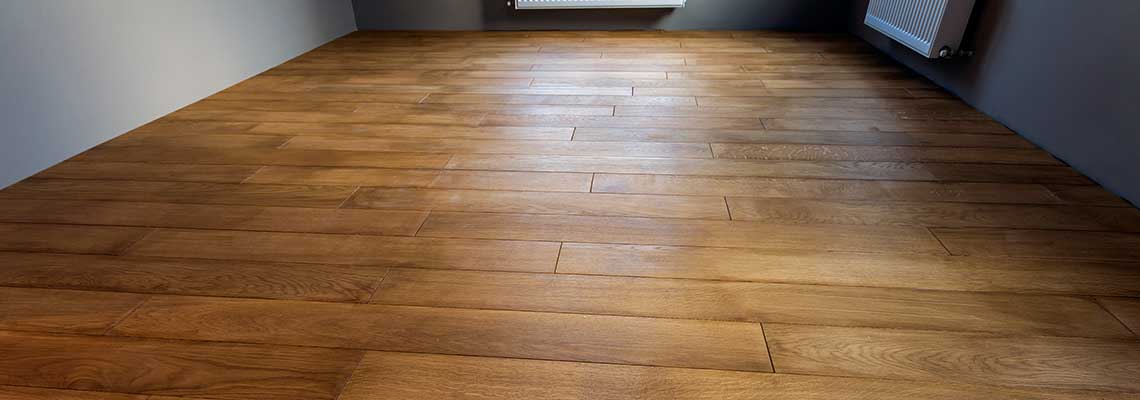
Engineered wood flooring is one of the most popular flooring choices in UK homes thanks to its stability, appearance, and compatibility with modern interiors. However, when signs of wear start to appear, many homeowners ask the same crucial question: can engineered wood floors be sanded?
The answer is not a simple yes or no. In this guide, we explain when engineered floors can be sanded, when they shouldn’t be, what risks are involved, and what alternatives exist if sanding isn’t suitable.
What Is Engineered Wood Flooring?
Engineered wood flooring is made from multiple layers of bonded materials, topped with a real wood veneer. This construction provides better dimensional stability than solid wood, especially in environments with fluctuating humidity.
A typical engineered board consists of:
- A real wood wear layer (oak, walnut, etc.)
- A plywood or HDF core
- A stabilising backing layer
Only the top wear layer is real wood — and this is the only part that can be sanded.
Can Engineered Wood Floors Be Sanded?
Yes, engineered wood floors can sometimes be sanded, but only if the wear layer is thick enough to safely remove material without exposing the core.
As a general guideline:
- Floors with a 3–4mm wear layer may tolerate one professional sanding
- Floors with thinner veneers should not be sanded
- Each sanding removes approximately 0.5–1mm of wood
Because engineered flooring varies greatly by manufacturer and product range, no two floors should be treated the same.
Why Wear Layer Thickness Is Critical
The wear layer determines whether sanding is safe or risky. If sanding reaches the core:
- The appearance of the floor is permanently damaged
- The surface becomes uneven and patchy
- The floor usually needs full replacement
Unlike solid wood, engineered flooring does not allow repeated sanding over its lifetime. This makes accurate assessment essential before any work begins.
How Professionals Assess Whether Sanding Is Possible
Before sanding an engineered floor, a professional will assess:
- Wear layer thickness (often by inspecting edges or vents)
- Tongue-and-groove depth
- Previous sanding history
- Board condition and adhesion
- Signs of delamination or veneer lifting
In some cases, test sanding may be carried out in a discreet area to confirm safety.
What Happens If Engineered Floors Are Sanded Incorrectly?
Improper sanding can cause serious and irreversible problems, including:
- Exposure of plywood or fibreboard layers
- Visible lines where veneer ends
- Structural weakness in the boards
- Increased risk of moisture damage
- Uneven colouring and poor finish adhesion
Once the veneer is breached, the floor cannot be restored.
Common Signs Engineered Floors Should NOT Be Sanded
Sanding is usually unsafe if:
- The floor was sold as “non-sandable”
- Veneer thickness is under 2.5–3mm
- The floor has already been sanded before
- There is visible edge wear near joints
- Boards show signs of separation or lifting
In these cases, sanding often does more harm than good.
Alternatives to Sanding Engineered Wood Floors
When sanding is not safe or advisable, it doesn’t automatically mean your engineered wood floor has reached the end of its life. In many cases, alternative restoration methods can significantly improve appearance, protect the surface, and extend usability without removing valuable wear-layer material.
Choosing the right alternative depends on the condition of the finish, depth of damage, and overall floor stability.
Recoating or Re-Varnishing Engineered Wood Floors
Recoating is often the best alternative when the surface finish is worn but the wood underneath remains intact. Instead of sanding through the veneer, the existing finish is lightly abraded to create adhesion, and a fresh protective coat is applied.
Recoating is suitable when:
- The finish looks dull or patchy
- There are light surface scratches but no deep gouges
- The wear layer is too thin for sanding
This method restores protection, improves appearance, and adds years to the floor’s lifespan with minimal disruption.
Buffing & Polishing (Screen and Recoat)
Floor buffing, sometimes called a screen and recoat, uses fine abrasives to lightly key the surface without removing wood. This prepares the floor for a new finish while preserving the veneer thickness.
Buffing and polishing can:
- Refresh tired-looking floors
- Improve sheen and uniformity
- Remove minor scuffs and marks
It is especially effective for engineered floors in good structural condition that simply look worn from everyday use.
Localised Repairs for Damaged Areas
If damage is limited to specific sections — such as doorways, seating areas, or near windows — localised repairs can be a practical alternative to full sanding.
These repairs may include:
- Replacing individual boards
- Repairing chips or edge damage
- Colour-matching treated areas
Targeted repairs preserve the rest of the floor and avoid unnecessary intervention across the entire surface.
Deep Cleaning and Professional Maintenance Treatments
In some cases, floors that appear worn are actually suffering from embedded dirt, residue, or old maintenance products. Professional deep cleaning and maintenance treatments can dramatically improve appearance without any abrasion.
This approach is most effective when:
- The floor has been poorly maintained
- Residue has dulled the finish
- There is no structural or veneer damage
While not a substitute for restoration, it can delay the need for more invasive work.
Engineered Wood vs Solid Wood – Why the Rules Differ
Solid wood floors are made from a single piece of timber, allowing them to be sanded multiple times over decades. Engineered floors, by contrast, have limited sanding potential due to their layered construction.
Treating engineered floors like solid wood is one of the most common and costly mistakes homeowners make.
Is Sanding Engineered Wood Worth It?
Sanding engineered floors can be worthwhile only when conditions are right. When done professionally and cautiously, it can:
- Remove surface scratches
- Refresh faded finishes
- Extend floor lifespan
However, in many cases, floor recoating or repair offers a better risk-to-reward balance.
Engineered wood floors can sometimes be sanded, but the decision must be based on wear layer thickness, floor condition, and professional assessment. Sanding without proper evaluation risks permanent damage and unnecessary replacement costs.
Understanding these limitations helps homeowners choose the safest and most cost-effective way to restore their floors.