
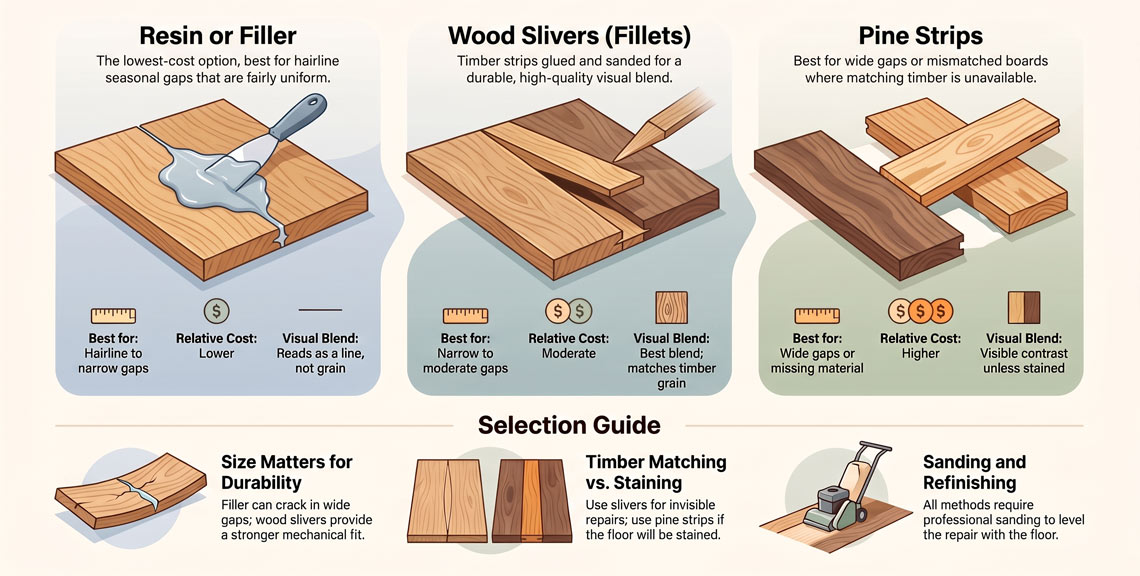
Not every gap between floorboards should be fixed the same way. A hairline seasonal gap, a wide historic gap, and a mismatched board all call for different repair methods, and using the wrong one is a common reason gap repairs fail or look out of place. Here's how the three main approaches — resin/filler, wood slivers (fillets), and pine strips — actually compare.
Quick Comparison
| Method | Best suited to | Relative cost | Durability | Visual blend |
|---|---|---|---|---|
| Resin/filler | Hairline to narrow, fairly uniform gaps | Lower cost | Good for narrow gaps, can crack or shrink back on wider ones | Can be colour-matched, but reads as a thin line, not grain |
| Wood slivers (fillets) | Narrow to moderately wide, reasonably consistent gaps | Moderate cost | Strong mechanical fit, holds well through seasonal movement | Best blend — matched timber sands and finishes with the floor |
| Pine strips | Wide gaps, mismatched boards, or where matching timber isn't available | Moderate to higher cost | Very durable if properly fitted, though pine differs in density/grain from hardwood | Visible unless stained and finished carefully; contrast possible with darker species |
Resin or Filler
What it is: A wood-filler compound, often resin- or epoxy-based, applied directly into the gap and sanded flush once cured.
Where it works well:
- Narrow, hairline gaps typical of normal seasonal shrinkage
- Gaps that are fairly consistent in width along their length
- Situations where speed and minimal disruption matter more than an invisible finish
Where it falls short:
- Wider gaps give the filler less surface area to grip, so it's more prone to cracking or popping out
- It can't flex with board movement the way a solid timber fit can, so gaps caused by an active moisture imbalance often reopen
- On close inspection it reads as a filled line rather than genuine grain, even when colour-matched well
Relative cost: This is generally the lowest-cost option of the three, since it's a quicker, more straightforward application with no timber sourcing or matching involved.
Wood Slivers (Fillets)
What it is: Thin strips of timber, cut to fit the gap and glued in place, then sanded flush with the surrounding floor.
Where it works well:
- Gaps too wide for filler to hold reliably, but still narrow enough for a strip to fit snugly
- Floors where the timber species can be reasonably matched, so the repair sands and finishes in line with the rest of the floor
- Situations where a durable, long-term fix matters more than speed
Where it falls short:
- Requires a closer timber match than filler does, since a sliver in the wrong species or tone can stand out once finished
- Takes more time to cut, fit, and finish than a filler application
- Less suited to very irregular, uneven gap widths, where a strip won't sit flush along its full length
Relative cost: Sits at a moderate cost level — more involved than filler due to the timber and fitting work, but generally more cost-effective long-term than full board replacement.
Pine Strips
What it is: Strips of pine (or another readily available softwood) used to fill wider gaps or replace missing material, particularly where matching the original hardwood species isn't practical.
Where it works well:
- Wide gaps where matched hardwood slivers aren't a realistic option
- Older floors where the original timber species is no longer available or affordable to source
- Situations where the floor will be stained afterwards, since staining can help pine blend in tone with surrounding boards
Where it falls short:
- Pine is softer and has a different grain pattern to most hardwood species, so contrast is often still visible even after staining and finishing
- Without careful finishing, pine strips can wear differently to the surrounding hardwood over time
- Not the best choice where an invisible, like-for-like repair is the priority
Relative cost: Typically moderate to slightly higher cost, depending on how much fitting and finishing work is needed to blend the strip with the surrounding floor.
So Which One Do You Need?
As a general rule:
- Narrow, consistent, seasonal gaps → resin/filler is usually sufficient and the most cost-effective choice
- Wider but still fairly regular gaps in matching timber → wood slivers give the strongest, best-blending repair
- Wide gaps, mismatched boards, or missing sections where matching timber isn't available → pine strips (or another suitable softwood) fill the practical gap, particularly ahead of staining
The right choice really depends on gap width, how consistent the gap is along its length, and whether matching timber is realistically available — which is easier to judge in person than from a description alone.
Getting the Right Fix for Your Floor
Our gap filling service covers standard gap filling between floorboards for everyday seasonal gaps, and where boards need a more substantial repair, our floorboards replacement service handles sliver, strip, and full board fixes. Once repairs are in, a sand and refinish through our hardwood floor sanding or engineered wood floor sanding service brings everything level and blends the repair into the rest of the room.
If you're not sure which method your floor actually needs, you can book a free visit and we'll assess the gaps in person before recommending anything.