
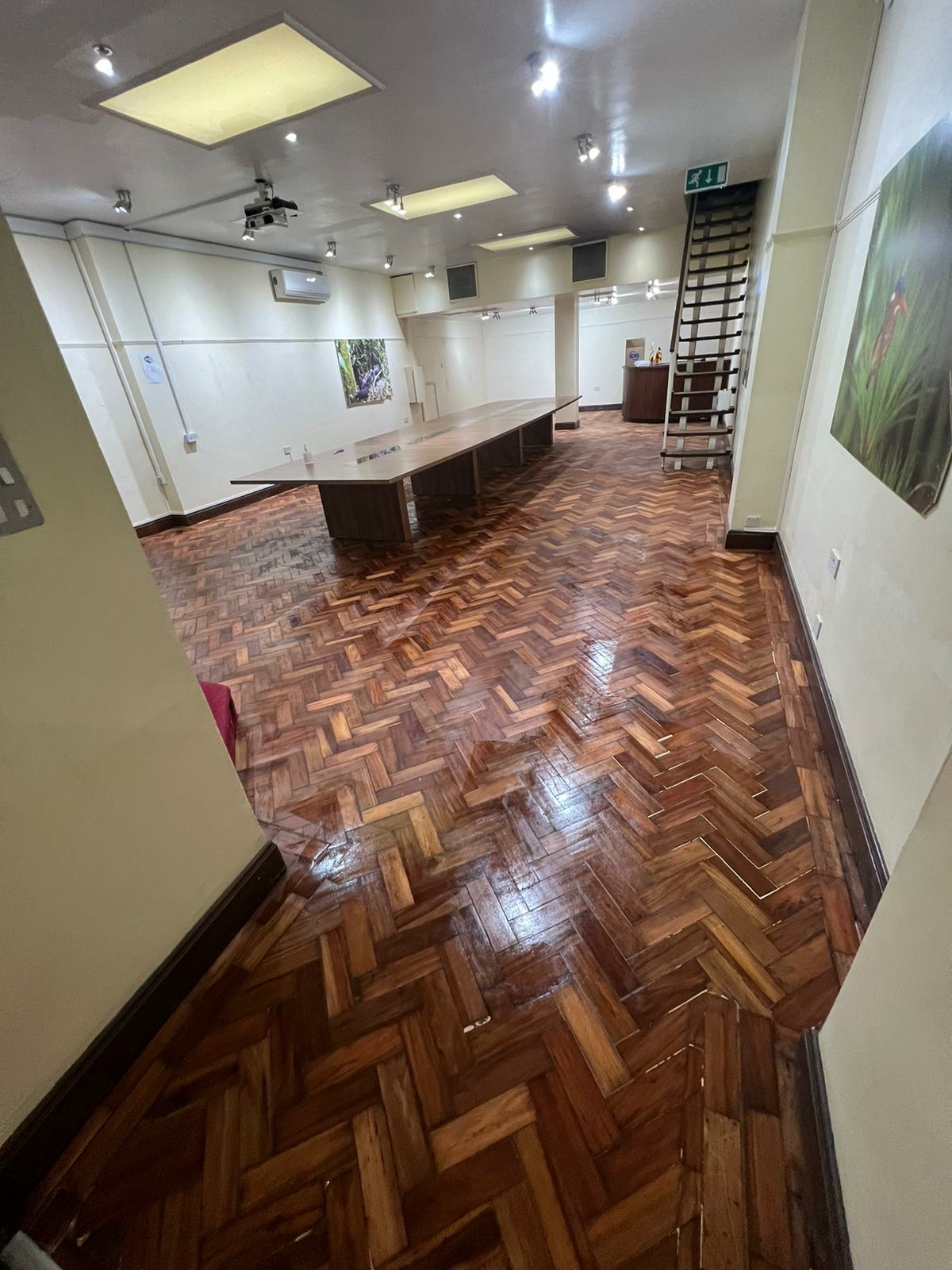
Parquet Floor Sanding at Trafalgar Square, WC2N
This job came to us from a building manager responsible for the upper floors of a Trafalgar Square property — a grade-listed commercial interior with original herringbone parquet throughout its meeting rooms and corridors. The floors had not been touched in years. There was heavy paint overspray from decorators, deep scuff marks from decades of foot traffic, and a thick layer of old finish that had gone patchy and dark in high-wear zones. The brief was simple: strip it all back and bring the wood up to a standard that matched the building's setting.
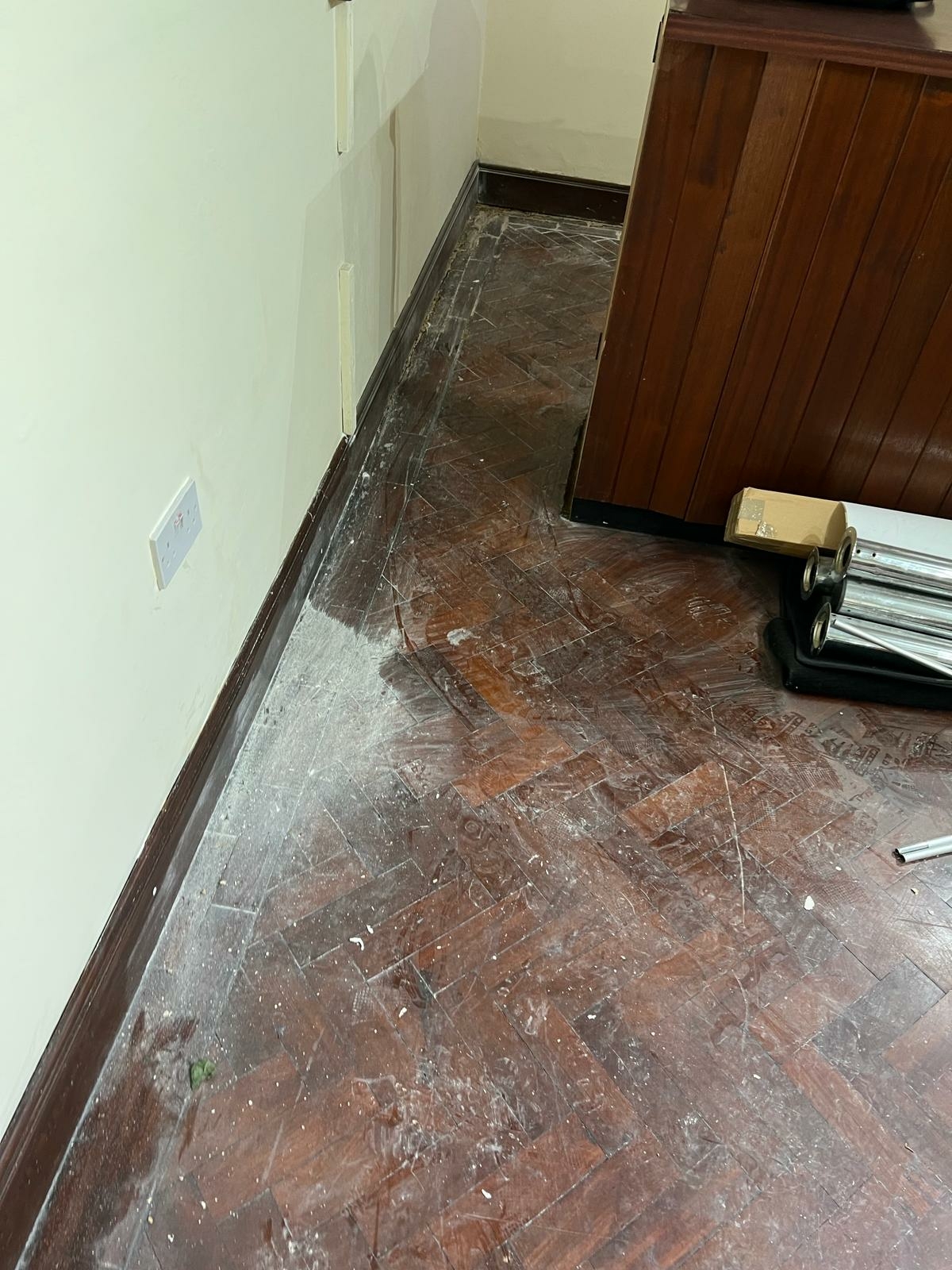
What We Found on Arrival
The parquet blocks were solid hardwood in a classic herringbone layout — most likely original to the building, which put them at 60-plus years old. Structurally they were in decent shape: no widespread lifting, no significant moisture damage. But cosmetically it was rough. The finish had worn completely through in the central walk lines, leaving bare wood exposed while the edges still held an old dark stain. There were also loose blocks in two areas, and gaps had opened up between blocks where the wood had moved over the years.
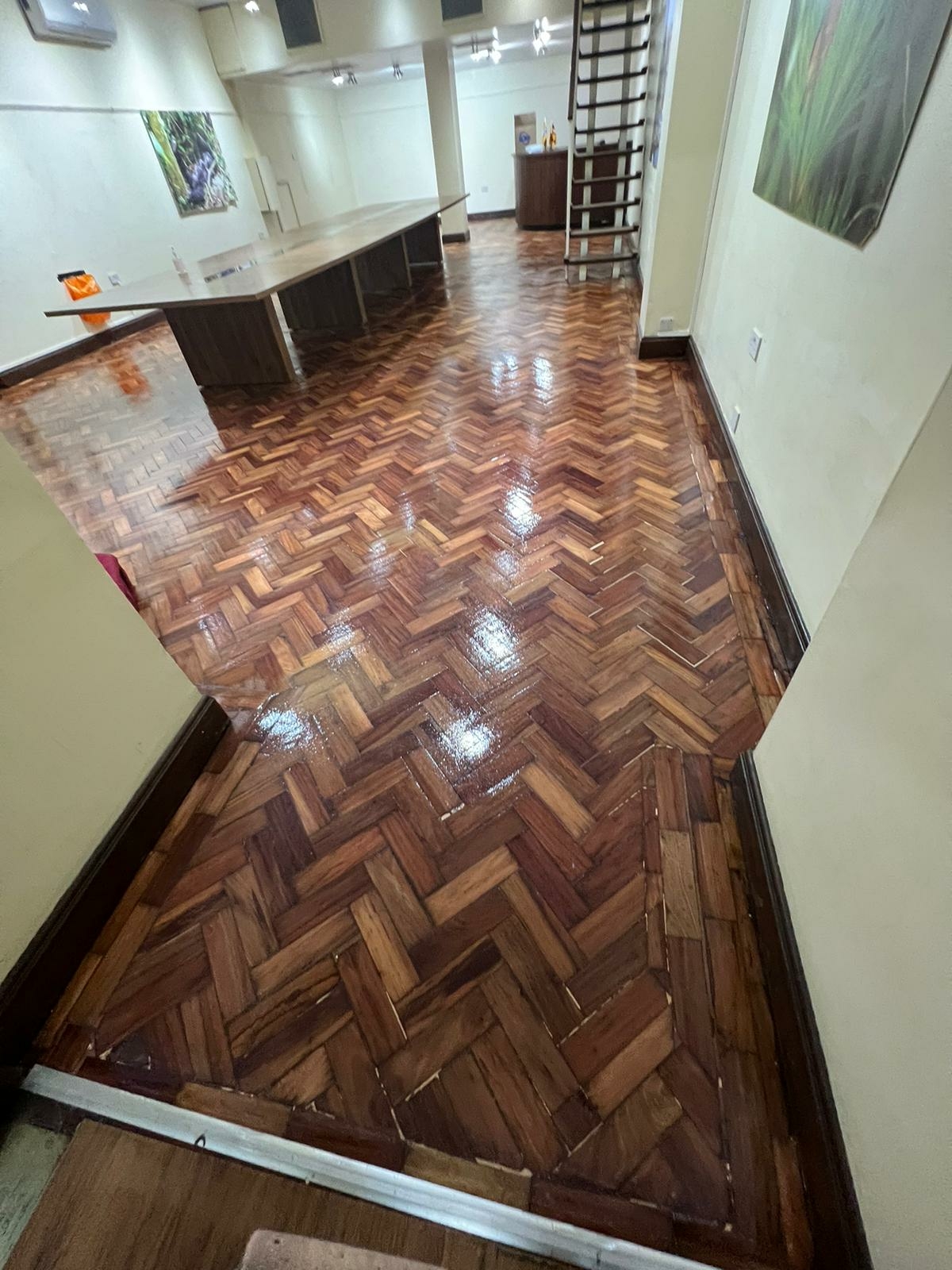
The Work
We started with the loose blocks: tightened and re-secured anything that had movement before a single pass with the drum sander, because you cannot sand over instability. Once everything was solid, we did the main floor in two passes — first with a coarser grit to strip the old finish and even out the surface, then a finer grit to bring out the grain cleanly. Edge work was done by hand sander along all the skirtings and into the corners where the drum cannot reach.
Gap filling came next. We used a dust-and-resin filler mixed on site from the sanding dust, which means the filled gaps match the exact colour of the wood rather than a generic filler that shows up as a stripe. After the filler cured, a light buff across the whole floor brought everything level.
For the finish we applied two coats of clear hard-wearing lacquer. The client wanted a gloss finish to suit the building's formal character, so that is what we delivered. Between coats we did a light denib to keep the surface flat.
The Result
The transformation was significant. What had been a tired, patchy floor became the focal point of the room — the natural colour variation of the old hardwood blocks, once the grime was gone, turned out to be genuinely beautiful. Warm honey tones through to deeper reddish-brown depending on the block, all unified under a consistent gloss finish. The building manager signed off on the day without any snags.
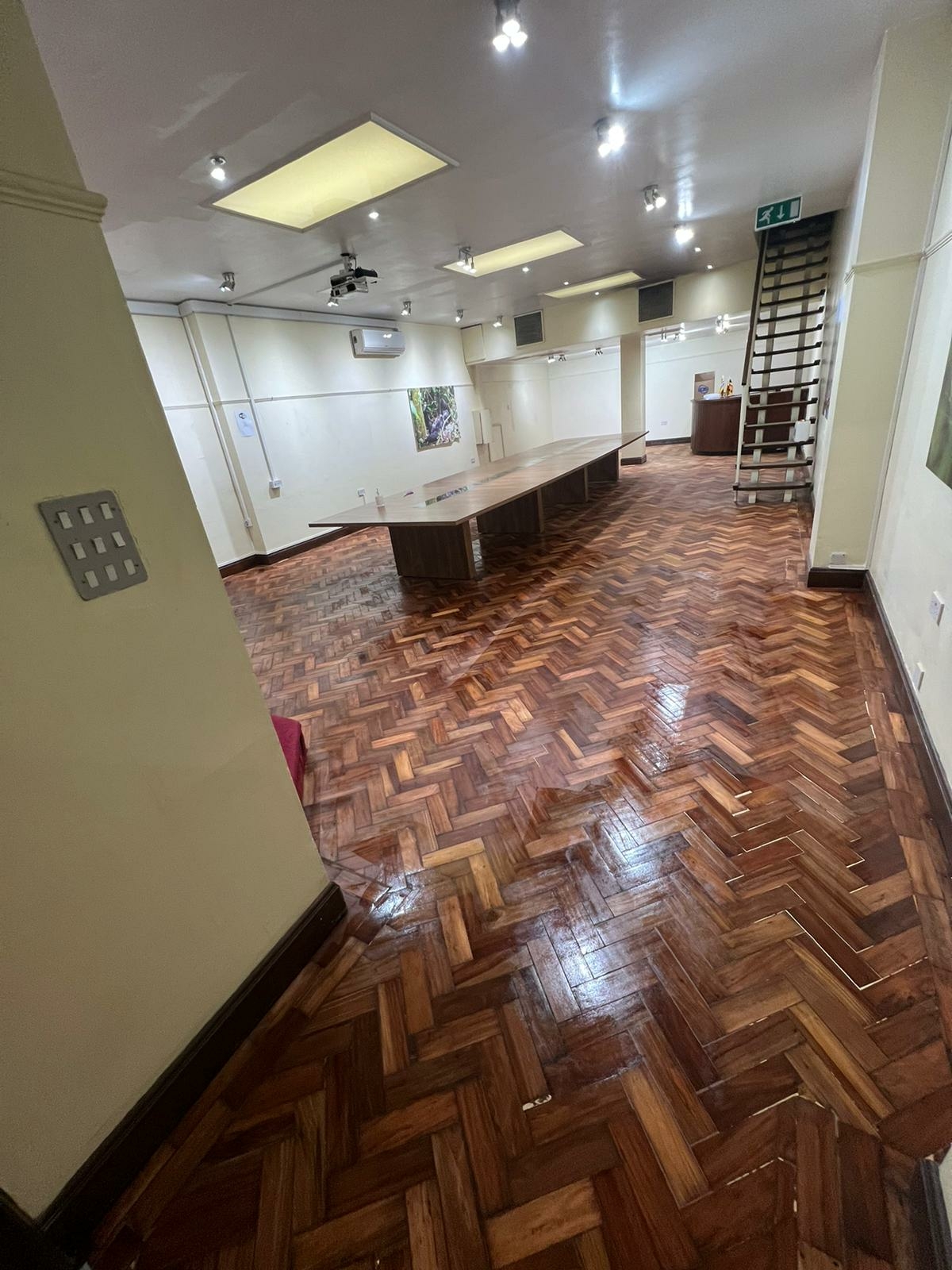
Project Summary
- Location: Trafalgar Square, London WC2N
- Floor type: Original herringbone hardwood parquet
- Services: Loose block re-fixing, gap filling, full sand and buff, two coats clear gloss lacquer
- Finish: Clear high-gloss lacquer
- Typical cost for this type of work: £30-45 per sqm depending on floor condition and finish
Frequently Asked Questions
How long does parquet sanding take for a commercial property?
For a property of this size and type — multiple rooms, commercial-grade old finish — we typically allow 3 to 5 days. That includes sanding, gap filling, and two coats of finish with curing time between coats. We work with building managers to minimise disruption and can phase the work room by room if access is needed throughout.
Can you sand original herringbone parquet without replacing damaged blocks?
In most cases, yes. Old parquet is often more resilient than it looks. We assess each block individually before starting. Loose blocks are re-secured, cracked or broken ones are replaced with matching material where possible, and the whole floor is levelled through the sanding process. Genuinely irreparable blocks are rarer than clients expect.
What does parquet sanding cost in London?
For a standard parquet sanding job in London — strip, sand, gap fill and finish — you are looking at £30-45 per sqm as a typical range. The variables are floor condition (more damaged floors take longer), the finish selected (oil tends to be similar to lacquer in price but requires more maintenance), and access constraints. We provide free quotes based on a site visit or photographs of the floor.